

The 2030 Horizon: Where Global Ultra-Wealth Is Headed Next
October 21, 2026This is part of a three-part series drawing on Altrata’s World Ultra Wealth Report 2026. Across the series, we examine where ultra-wealth is concentrated today, where it is headed next, and how expectations among UHNW clients are reshaping the premium services that serve them. In this installment, we look ahead to 2030 and the regions, industries, and cities expected to shape the next chapter of global wealth.
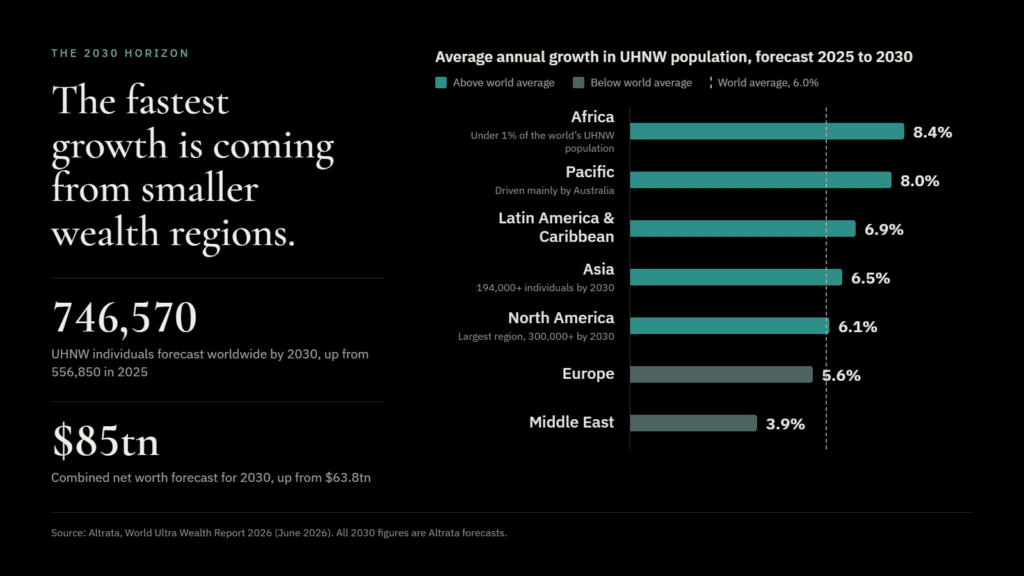
By 2030, the global ultra-high-net-worth population is projected to reach 746,570 individuals, nearly 190,000 more than in 2025. Their combined wealth is expected to increase from $63.8 trillion to approximately $85 trillion.
The scale of that growth is significant, but the geography behind it may be even more important. The next generation of ultra-wealth will not be concentrated solely in long-established centers such as New York, London, and Hong Kong. New industries, expanding capital markets, and shifting economic influence are creating meaningful wealth across a broader range of cities and regions.
For businesses serving UHNW individuals, that changing map matters. Understanding where wealth is being created offers a glimpse into where investment, business activity, lifestyle spending, and demand for highly specialized services may follow.
The Forces Shaping Wealth Through 2030
Altrata expects wealth creation through 2030 to be driven primarily by technological transformation, the expansion of private capital, and changes to the global economy shaped by artificial intelligence, the energy transition, and digital infrastructure. These are broad forces influencing how and where wealth is created.
Together, these trends point to a wealth landscape increasingly shaped by technology and investment across a wider range of industries.
A Broader Global Wealth Map
North America is expected to remain the world’s largest UHNW region, adding roughly 77,000 ultra-wealthy individuals by 2030 and exceeding 301,000 residents.
Asia is projected to grow slightly faster, at an average annual rate of 6.5%, reaching approximately 194,100 UHNW individuals. Growth is expected across India, South Korea, Taiwan, and several Southeast Asian markets, even as China’s pace moderates.
Europe, meanwhile, is forecast to reach approximately 184,100 UHNW individuals by 2030, supported by its established financial centers, institutional stability, and enduring appeal to internationally mobile wealth.
Africa and the Pacific begin from smaller bases but are expected to record some of the fastest percentage growth rates of any region.
These projections point to an important shift: established regions will remain central to global UHNW wealth, while emerging markets account for a share of future growth.
The Cities to Watch Are Not Always the Largest
That shift is particularly visible at the city level.
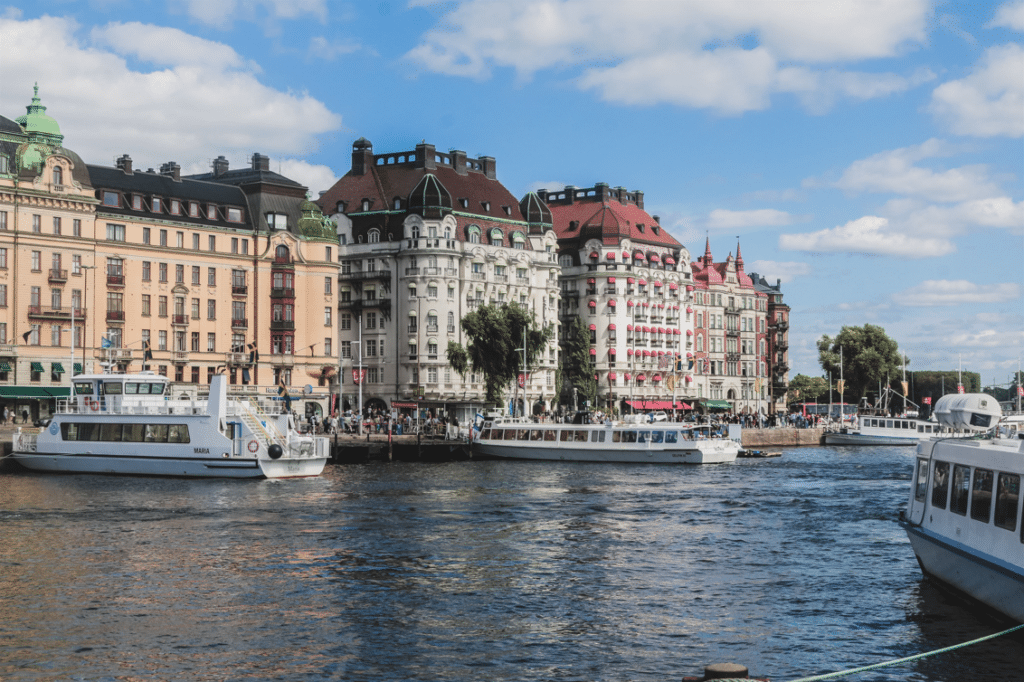
Altrata projects the fastest-growing UHNW populations through 2030 to be in Delhi, Stockholm, Wuhan, Guangzhou, and Melbourne.
Delhi leads the group with projected annual growth of 11.3%, rising from 1,095 UHNW residents to 1,868 by 2030. Stockholm follows at 10.8%, while Wuhan, Guangzhou, and Melbourne are all expected to post annual growth close to or above 10%.
Technology, manufacturing, finance, natural resources, venture capital, and private enterprise are creating new concentrations of wealth alongside the established global hubs.
What a More Distributed Wealth Landscape Means
As wealth spreads across more markets, the lives of the individuals managing it are likely to become increasingly complex.
A founder may build a company in one city, maintain investors or portfolio companies in another, own residences in multiple markets, and conduct business across several financial centers. Family offices may similarly oversee assets, properties, advisors, and operating companies across jurisdictions.
For luxury hospitality, financial services, real estate, private aviation, and other sectors serving this population, the implication is broader than simply having more potential clients. Service models will need to accommodate individuals whose lives are increasingly distributed across multiple locations.
Consistency will matter across markets. So will flexibility, coordination, and the ability to deliver the same standard of service regardless of where the client happens to be.
The HeliFlite Perspective
For HeliFlite, a practical connection to Altrata’s forecast is the way a client’s itinerary can combine different modes of travel. In New York, HeliFlite offers private helicopter transfers between Manhattan and area airports, including JFK and Teterboro. The company can also coordinate helicopter flights with business aircraft and ground transportation, linking an airport arrival with the next leg of a trip.
These transfers serve a regional need: helping clients move between airports and city destinations when timing and location make a helicopter useful. They show how a specialized service fits into a broader itinerary within the markets it serves. As UHNW wealth grows across more cities, HeliFlite’s perspective remains grounded in the connections it provides in its own operating regions.
The story of ultra-wealth through 2030 is not simply about how much wealth will be created. It is about where that wealth will exist, how widely its owners will operate, and how businesses serving them will adapt to a more connected and geographically diverse UHNW world.
Carolyn Caretti Marino
973.273.7572
cmarino@heliflite.com


